
Tinnitus Relief Through Modern Hearing Aid Technology

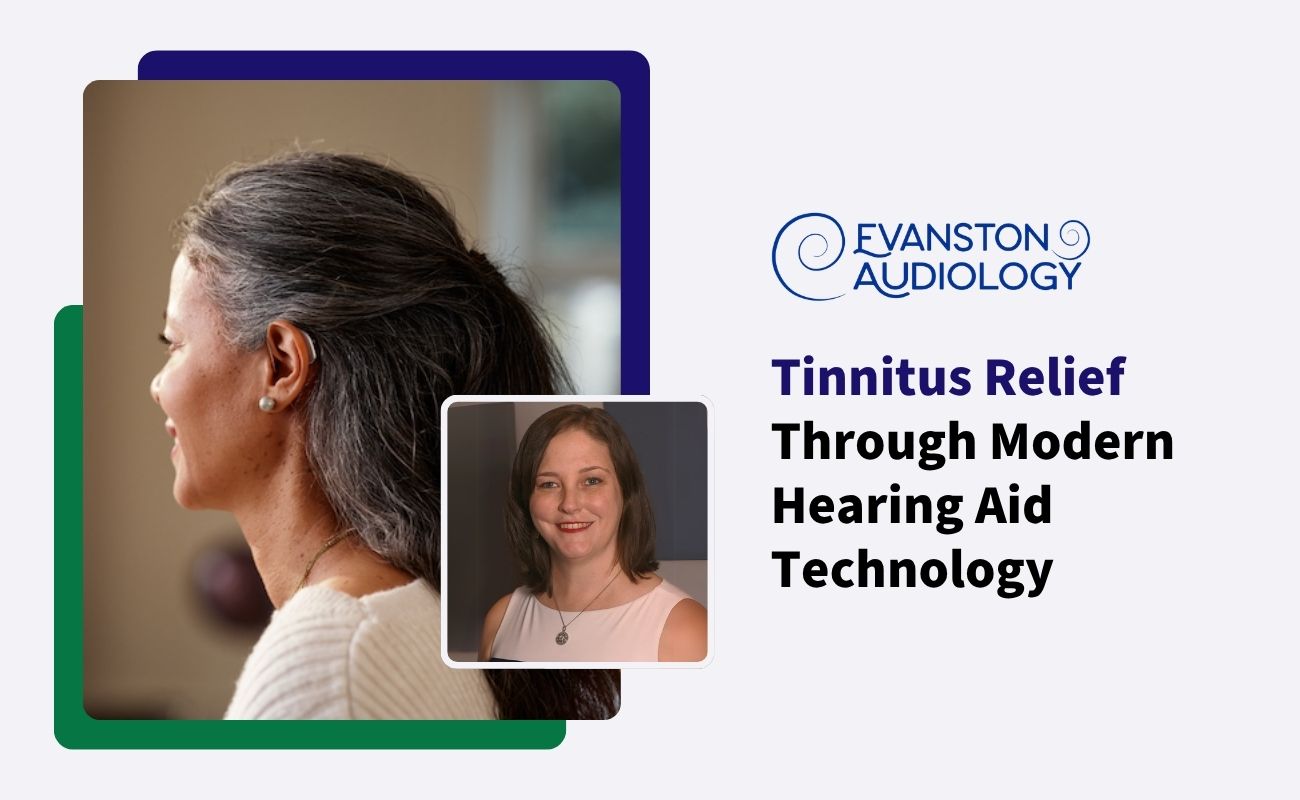
If you live with tinnitus, you know how relentless it can be. The ringing, buzzing, or hissing that nobody else can hear follows you into quiet rooms, keeps you up at night, and makes conversations harder than they should be. What many people don't realize is that today's hearing aids do far more than amplify sound. Many are built specifically to address tinnitus.
At Evanston Audiology, we work with tinnitus patients every day. Here's an honest look at what's actually available and how each approach works.
Why Hearing Aids Help in the First Place
Tinnitus and hearing loss are deeply connected. When the auditory system stops receiving normal sound input, the brain sometimes "fills in the gaps" with noise of its own. Hearing aids help by giving your ears and your brain more real sound to process, which reduces that tendency to generate phantom signals.
Many devices also include dedicated tinnitus features that layer in carefully designed sounds to interrupt or mask the ringing. Together, those two approaches are more effective than either one alone.
Signia's Targeted Notch Therapy
Signia takes a precise approach with a feature called Notch Therapy, available in the Signia Pure Charge&Go IX. It's designed for tonal tinnitus, where you hear a fairly consistent single pitch.
The hearing aid creates a narrow dip in amplification centered on that specific frequency. Over time, your brain learns to pay less attention to it, and the tinnitus fades into the background. It runs passively — no exercises, nothing extra to remember. For patients with tonal tinnitus, results can be surprisingly meaningful.
Widex Zen's Relaxation Approach
Widex takes a different route with the Zen program in the Widex Allure. Rather than masking your tinnitus, Zen tones give your brain something pleasant to focus on — soft, chime-like sounds that follow a non-repeating harmonic pattern.
There's a practical reason for this. Stress and tinnitus tend to feed each other. A gentle auditory backdrop can help break that cycle, making the tinnitus feel less urgent. Through the Widex Allure app, you can adjust the style and tempo until you find something that actually feels soothing.
Starkey Omega AI's Hands-On Control
The Starkey Omega AI integrates tinnitus management directly into its sound processing system, with one standout feature: the My Starkey app puts control in your hands. You can adjust masking settings, pull in streaming audio, or use environmental sounds as a relief layer, all from your phone.
The Omega AI also uses a system called DNN 360 to improve hearing clarity in noisy environments. That matters because tinnitus often feels louder and more intrusive when listening becomes a strain. Better speech clarity in difficult situations can reduce that daily burden considerably.
Phonak Infinio's Flexible Sound Generator
The Phonak Infinio includes Tinnitus Balance, a built-in sound generator you can use alongside regular amplification or on its own during quieter moments. If you notice your tinnitus most when the room goes quiet late at night or during a slow afternoon, this kind of flexibility can be genuinely useful.
The dual-chip design means tinnitus features and speech processing run simultaneously without interfering with each other. You don't have to choose between hearing people clearly and managing your symptoms.
Oticon Intent's Whole-Brain Listening Approach
Oticon's philosophy is a bit different. The Oticon Intent doesn't rely on a dedicated tinnitus program. Instead, it focuses on giving your brain a rich, complete sound environment throughout the day. The thinking is straightforward: a well-stimulated auditory system has less reason to fill the silence with phantom noise.
The device's 4D sensor system and MoreSound Intelligence adapt in real time to your environment, keeping the sound around you natural and full. For some patients, that steady stream of quality input makes a bigger difference than targeted tinnitus features would.
Finding the Right Tinnitus Solution for You
There's no universal answer here. The right approach depends on the type of tinnitus you have, how much it affects your daily life, and what's happening with your hearing overall. Tonal tinnitus, for example, responds differently than the kind that fluctuates or shows up only in certain situations.
That's exactly why a proper evaluation matters before choosing a device. At Evanston Audiology, Dr. Kate Dunckley works closely with patients to understand what's driving their tinnitus and match them with technology that actually fits. We carry all the brands mentioned here and can walk you through the differences in person.
You don't have to just live with tinnitus. We are here to help. To schedule an appointment, call 847-869-9433 or visit our Tinnitus Management page to learn more.
Contact us to learn more about our services and hearing aid options.
Office
Visit us at 1811 Benson Ave, Evanston.
Located on the corner of Benson and Clark.
For those traveling on public transportation, we are conveniently located just steps away (600 ft) from the Davis CTA and Pace bus terminal, and Purple Line hub. We are also only 600 ft from the Metra Union Pacific-North (UP-N) Davis stop.
Opening Hours
Holiday Closures
2026: 1 January, 19 January, 25 May, 4 July, 7 September, 26-27 November, 25 December
2027: 1 January